Pre-Renovation Planning for Richmond Fescue Lawns: Why July Decisions Set Up September Success
Giving Hope Lawn Management • July 2026 • Richmond, VA & Glen Allen, VA
For Richmond and Glen Allen fescue lawns, September is the make-or-break window for the next year of lawn quality. But the decisions that determine whether September renovation succeeds get made in July, not September. Lawns booked in July get the right early-September dates. Lawns that wait until late August get pushed into October when establishment risk doubles.
Home > Single Post
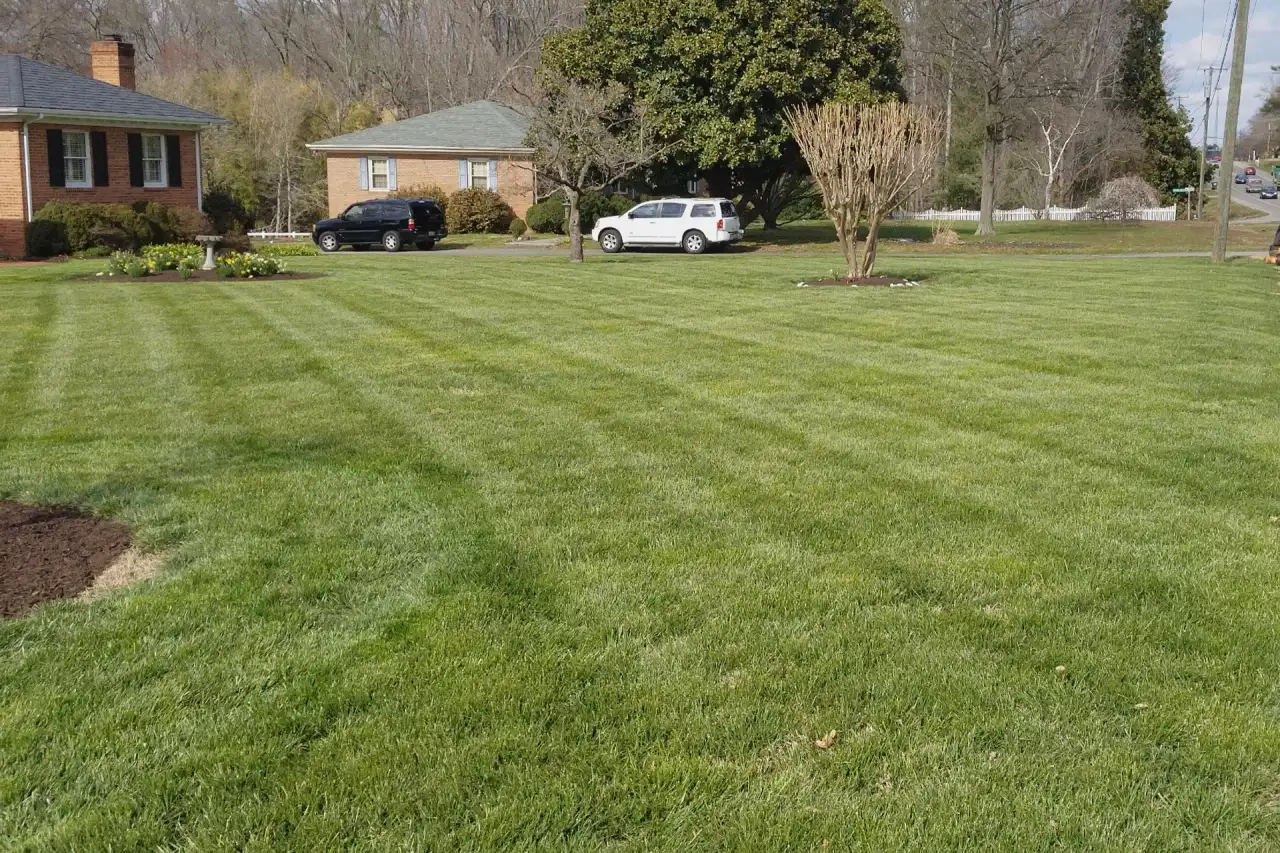
Every September we run renovations on 80 to 120 Richmond area properties. The ones that struggle almost always trace back to decisions or non-decisions that happened in July, not to anything that went wrong in the actual September work. The lawn at the end of July tells us what is going to happen in September — crown survival, soil condition, disease history, irrigation capacity, shade pattern, and realistic budget are all visible now.
Why July — Not August or September
September renovation in our area runs from roughly September 1 through October 15. The first three weeks of September are the ideal window for fescue establishment in Richmond. Soil temperatures have dropped enough that seed germinates well, but the growing season still has enough warmth to let new seedlings build root mass before frost.
Booking those first three weeks of September requires reaching out in July. By mid-August, the early dates are full. Properties that wait until Labor Day to call usually get pushed into late September or early October, which works for established lawns but adds real risk for new seedlings facing the first frost dates. July also strips away the optimism of spring — thin spots, heat-damaged zones, irrigation gaps, compaction patterns, and disease hotspots all become visible.
The Four Questions a July Audit Answers
1. How Much Existing Turf Is Salvageable
Lawns where 70%+ of the canopy is healthy fescue need overseed, not full renovation. Lawns where less than 40% is viable need full renovation, sometimes including stand kill and reseed. The 40–70% range gets aeration plus slit-seed plus targeted bare-spot work. We walk a grid pattern, pull tufts, and check crown condition — white and firm counts as alive, brown or pulpy counts as dead.
2. What the Soil Looks Like at Root Depth
Most Richmond properties have native clay subsoil, filled lots from construction, or older properties with reasonable topsoil. We pull soil cores 6–8 inches deep and check layering, color, smell, root presence, and resistance. Heavy compaction shows as a hard layer 2–4 inches down with no root penetration. Homeowners can do a simplified version with a long screwdriver — resistance at 3 inches and refusal at 4 signals significant compaction.
3. Overseed, Slit-Seed, or Full Renovation
Overseed works only where existing turf is mostly intact — germination rates run 30–50%. Slit-seed opens narrow slits and drops seed directly in, achieving 70–85% germination — the workhorse approach for moderately damaged lawns. Full renovation involves killing existing turf, grading low spots, applying amendments, and seeding into prepared ground. It's best for lawns where existing turf is mostly gone or underlying soil needs serious work.
4. What Scope Fits the Budget
Overseed only: $300–$500. Aeration + overseed: $500–$800. Aeration + slit-seed: $700–$1,200. Full renovation with soil work: $1,200–$2,500. Add starter fertilizer at $80–$120 each, typically two applications needed. Sometimes the right answer is a phased plan — year one for the front yard, year two for the back. Phasing produces better outcomes than spreading the budget too thin across a whole property.
What the Audit Looks Like in Practice
A typical July audit on a Richmond property takes 30–45 minutes. We start at the street and walk a slow loop, noting shade pattern, slope, irrigation coverage, and visible thin zones. We pull 3–5 soil cores at representative spots, test tufts in damaged zones for crown viability, and check for disease activity on dewy mornings before sun burns off the mycelium.
The deliverable is a written scope of work with a price, a recommended date window in September, and notes on any cultural changes needed between now and renovation day. The audit itself is free for properties in our service area. If you decide not to book or choose a different scope, there is no obligation — we would rather walk away from a property that is not the right fit than do the wrong work.
Cultural Changes Between July and September
The lawn condition on renovation day matters. Here is what to do — and not do — in the eight weeks before the work.
Watering
Continue two mornings a week at half an inch. Do not let the lawn go fully dormant if you are paying for renovation — crown survival matters for the existing turf you want to keep.
Mowing
Maintain 4 inches through August. Drop to 3 inches for the final mow before renovation day. The lower cut helps seed-to-soil contact on renovation day.
Fertilizer & Weed Control
No nitrogen until renovation. Hold broadleaf herbicide — most products have 30–60 day plant-back restrictions. Treating weeds in August pushes renovation past the ideal window. Stay on top of brown patch or pythium activity through August.
What Happens on Renovation Day
The crew arrives in the morning. First pass: core aeration, sometimes a double pass on compacted lawns — plugs are left on the surface to break down. Second pass: slit-seeding or overseeding. Starter fertilizer goes down. If the scope includes topdressing, that gets spread.
Day 1
Loose plugs, seed at surface, fertilizer prills visible. The property looks worse than day zero.
Day 7–14
First germination visible as fine green hairs in the slits or across seeded zones.
Day 14–28
Density develops across seeded zones.
Day 28–60
New turf knits into existing canopy. By Thanksgiving, a properly renovated lawn looks meaningfully better than it did in July.
The Post-Renovation Watering Protocol
This is where homeowners often lose otherwise excellent renovation work. New seed needs surface moisture to germinate. The watering plan after renovation is the opposite of the July plan.
Days 1–14
Light irrigation 2–3 times a day, just enough to keep the seed bed damp. 5–10 minutes per zone, three times a day depending on weather. Skip days when it rains.
Days 14–28
Reduce to once a day, longer duration. 20–30 minutes per zone in the early morning as roots start reaching down.
Days 28–60
Transition to twice-a-week deep watering as the lawn matures into an established stand.
Without the right watering plan, even a perfectly executed renovation can fail. We coach homeowners through this and check in weekly during the first month.
Frequently Asked Questions
How early should I book renovation?
July is ideal. By the first week of August our early September dates are usually full. Late August calls often push into late September or October. Earlier booking means better dates and a better outcome.
Can I do this myself with a rented machine?
For overseed, yes, with reasonable results. For slit-seed, the machines are heavy and operating them on slopes is harder than it looks. Most homeowners who try slit-seeding themselves either undermix the seed or run uneven coverage. The labor is the real cost of professional renovation — the machine time is the smaller part.
Book Your Free July Audit
Serving Richmond, VA and Glen Allen, VA. The audit is free for properties in our service area. A typical renovation runs $400 to $1,500 depending on size and scope. Early September dates fill in July — reach out now to secure your window.