Drainage Control
What Actually Happens During a Drainage Installation
Giving Hope Lawn Management • October 2026 • Richmond, Glen Allen & Mechanicsville, VA • 8 min read
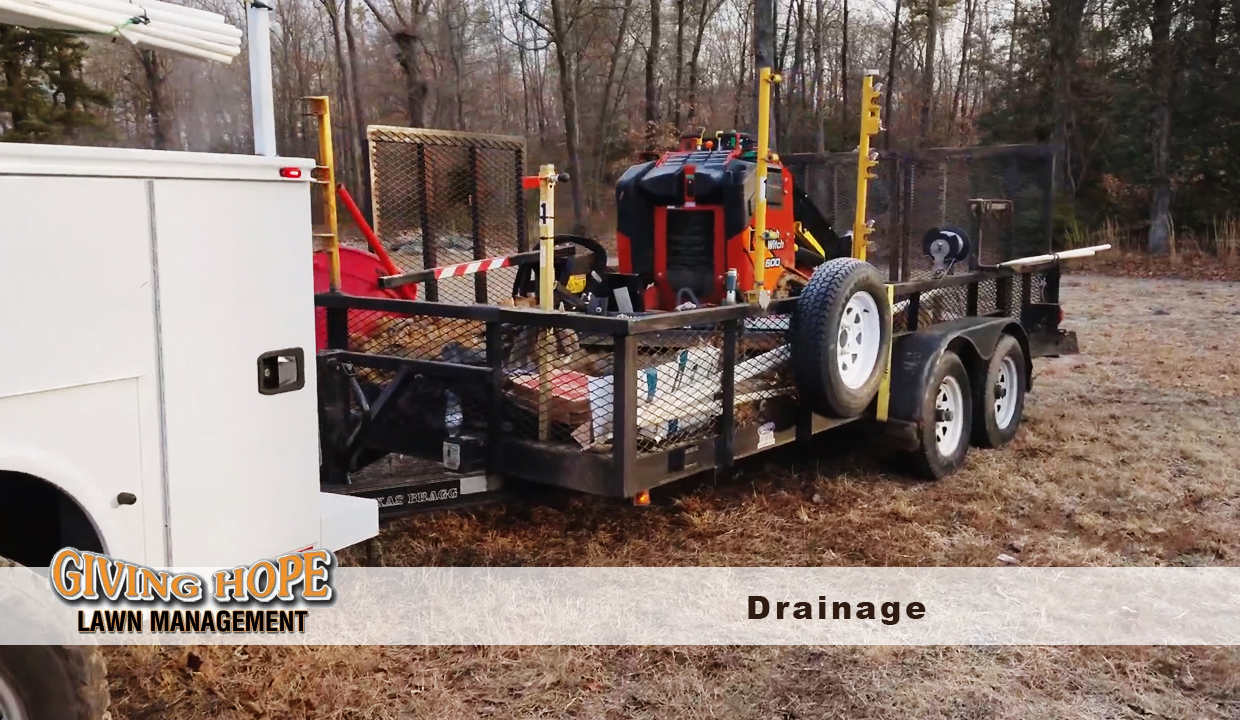
Short Answer: A residential drainage installation is usually a one to three day job. It starts with a design and a Miss Utility ticket, which is legally required in Virginia and takes three business days, so nothing gets dug the day you call. Then comes layout, trenching, setting pipe to consistent fall, stone and fabric where the design calls for it, connecting inlets and the outlet, backfilling, and restoring the surface. Expect the lawn to look rough for several weeks along the trench line, which is normal and part of why fall is a good time to do it.
Drainage work is one of the few landscape services where the finished product is almost entirely invisible. You pay a meaningful amount of money, a crew digs up part of your yard, and when they leave you cannot see anything except some disturbed turf. That makes it hard to evaluate and easy to feel uncertain about.
So here is what the work actually involves, step by step, and what your property will look like at each stage. Knowing the sequence makes it much easier to tell whether a job is being done properly.
Design Comes Before Digging
The part that determines whether a system works happens before anyone touches a shovel, and it should involve someone walking your property rather than quoting from a description over the phone.
That walk establishes where water comes from, where it collects, and critically where it can be discharged. Elevations get checked, because fall is what makes gravity systems work and a flat Richmond area lot frequently has less usable fall than it appears to. Existing utilities, irrigation lines, invisible pet fence, and landscape lighting all get noted.
A design should tell you where the pipe runs, what type and diameter, what fall it will be set at, where inlets go, and where the outlet discharges. If a contractor cannot answer the outlet question specifically, that is the moment to slow down, because water has to end somewhere and a system without a designed discharge is a system that will fail.
Photos of the standing water at its worst help enormously here, which is why we suggest taking them during a storm rather than waiting.
Miss Utility and Why You Wait
In Virginia, contacting Miss Utility before excavating is required by law, not a courtesy. The notice period is three business days, which means no legitimate contractor digs the day you call.
During that window, utility operators come out and mark their buried lines with paint and flags. Gas, electric, water, communications. Those marks are what keep a trencher from hitting a gas line, and the consequences of skipping that step range from an expensive repair to something far worse.
Worth knowing that Miss Utility covers public utilities, not private lines. Irrigation, landscape lighting, invisible fence, a gas line running out to a grill or pool heater, and a septic system are all your responsibility to identify. If you know where any of those run, say so during the walkthrough, because nobody else is going to mark them.
If a contractor offers to start immediately with no mention of utility locates, that tells you something about how the rest of the job will go.
Layout and Trenching
On the first working day, the run gets laid out and marked, and the depth and fall get established along it. This is where a design becomes physical, and adjustments sometimes happen once the actual elevations are checked with instruments rather than by eye.
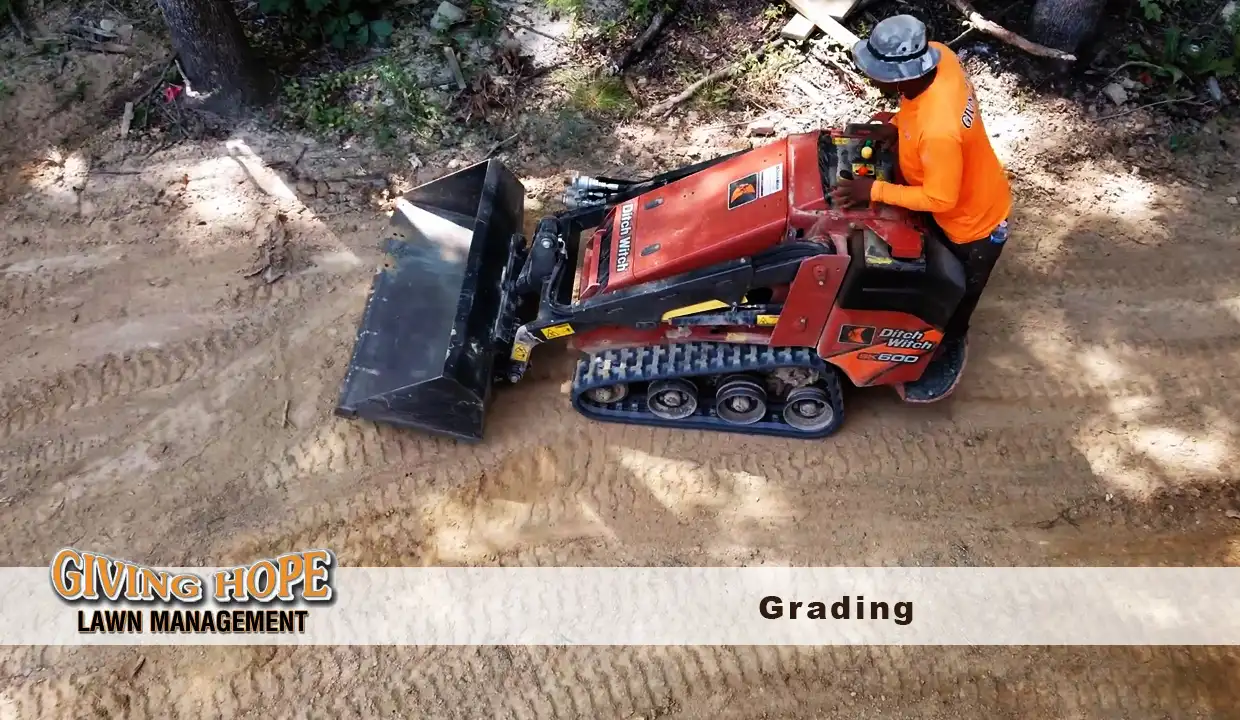
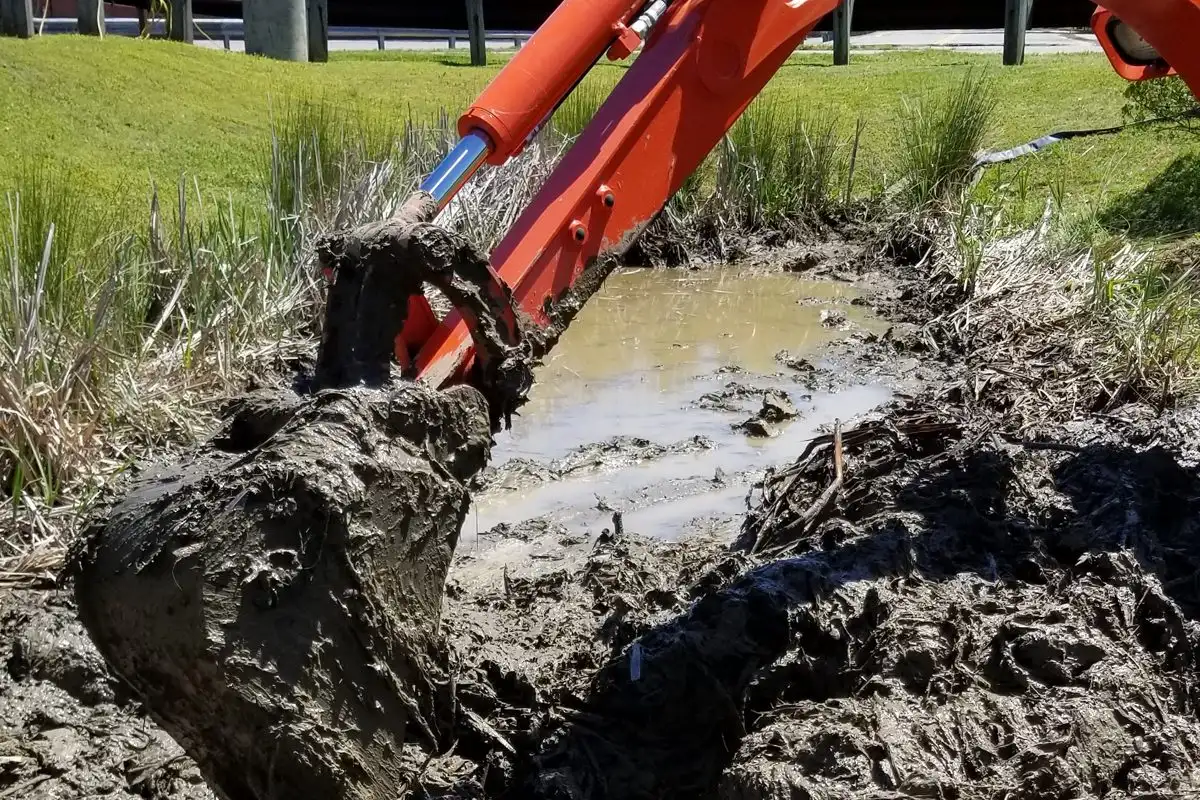
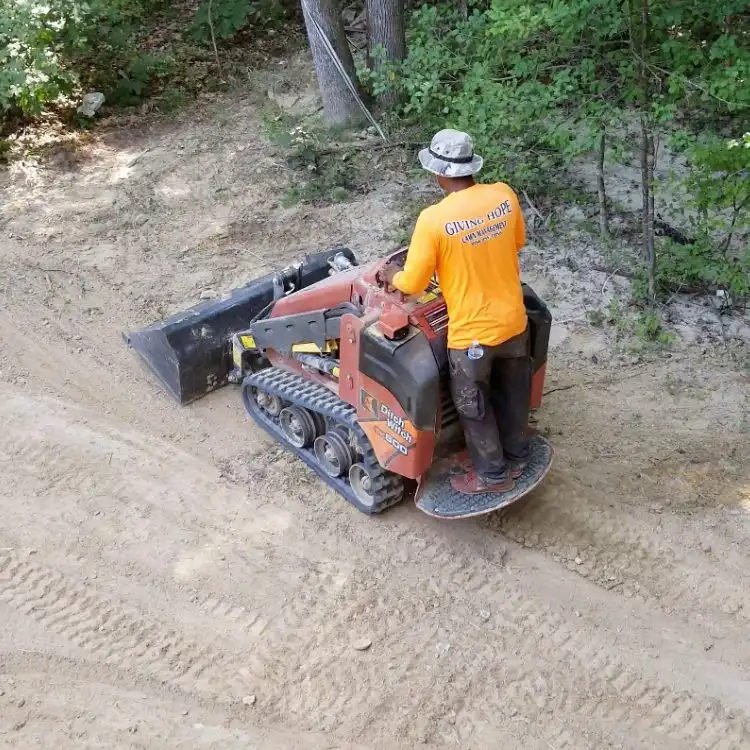
The trenching itself is fast, which surprises people. A walk behind trencher or a compact machine with a trencher attachment cuts a narrow clean trench, and a typical residential run gets opened in a few hours. Narrow matters, because a narrow trench means less disturbance and easier restoration than digging with a bucket.
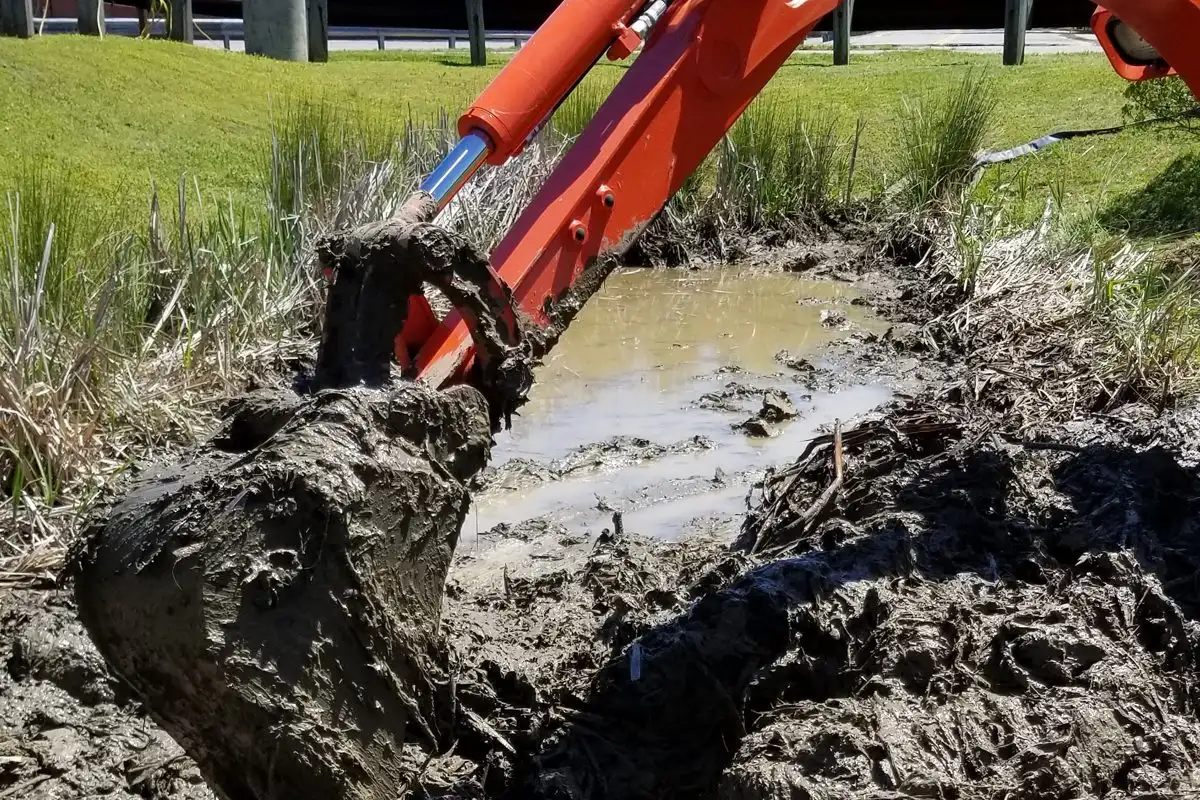
Spoil, meaning the excavated soil, comes out alongside the trench. On our clay it comes out in heavy chunks and there is more of it than you expect, since loosened soil occupies considerably more volume than it did in the ground. Some goes back in as backfill and the remainder either gets used elsewhere on the property or hauled off, and that should be settled in the quote rather than discovered afterward.
Where a trench has to cross tree roots, hand digging replaces machine work. Cutting major roots to save time damages trees, and a crew that slows down at the root zone is doing you a favor even though it costs hours.
Setting Pipe to Grade
This is the step that separates a system that works for twenty years from one that fails in three, and it is invisible once backfilled.
Pipe has to run at consistent fall toward the outlet. Not steep, just consistent. A common guideline is roughly a one percent slope, meaning about an inch of drop every eight feet, and it must be continuous. A belly in the line, meaning a low spot where the pipe dips and comes back up, collects silt and standing water and eventually plugs. You cannot see it once the trench is closed and you will find out about it years later.
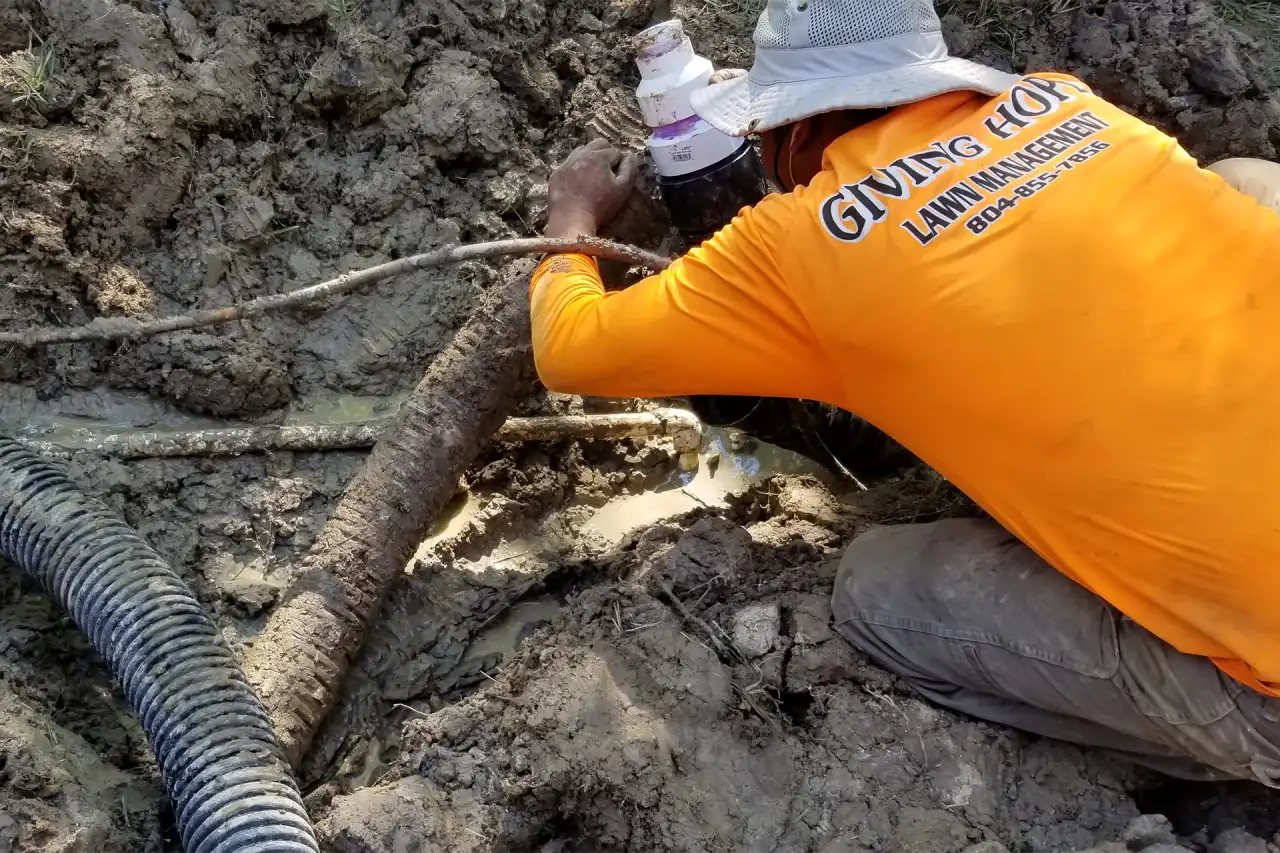
Pipe choice matters too. Solid smooth wall pipe for conveying water, such as downspout lines, because you want that water carried away rather than leaking back into the soil. Perforated pipe where the design intends to collect subsurface water. Confusing the two is a common error and it undermines the whole system.
Fittings get solvent welded or properly coupled so joints do not pull apart under soil movement, which matters on clay that shrinks and swells through the seasons. A joint that separates underground is the same as a broken pipe.
Stone, Fabric, and Backfill
Where the design includes a French drain section, the pipe gets bedded in washed stone and wrapped with filter fabric. Both details matter and both get skipped on cheap installations.
Washed stone means the fines have been rinsed out. Crushed material with fines still in it packs together and the void space you are paying for disappears. Filter fabric keeps surrounding soil from migrating into the stone, which is what silts a system in over the years. On our clay, which produces plenty of fine particles, fabric is not optional.
For solid conveyance lines, the pipe usually gets bedded and backfilled without the stone, since there is nothing to collect.
Backfill goes in with compaction in lifts rather than dumped in loose all at once. Loose backfill settles over the following months and you end up with a visible depressed line running across your yard, which is the most common complaint about drainage work generally. Proper compaction costs time on installation day and prevents that.
Inlets, Outlets, and Making It Usable
Catch basins get set slightly below the surrounding grade so water actually runs into them, which sounds obvious and is frequently gotten wrong. A basin set flush or high collects nothing.
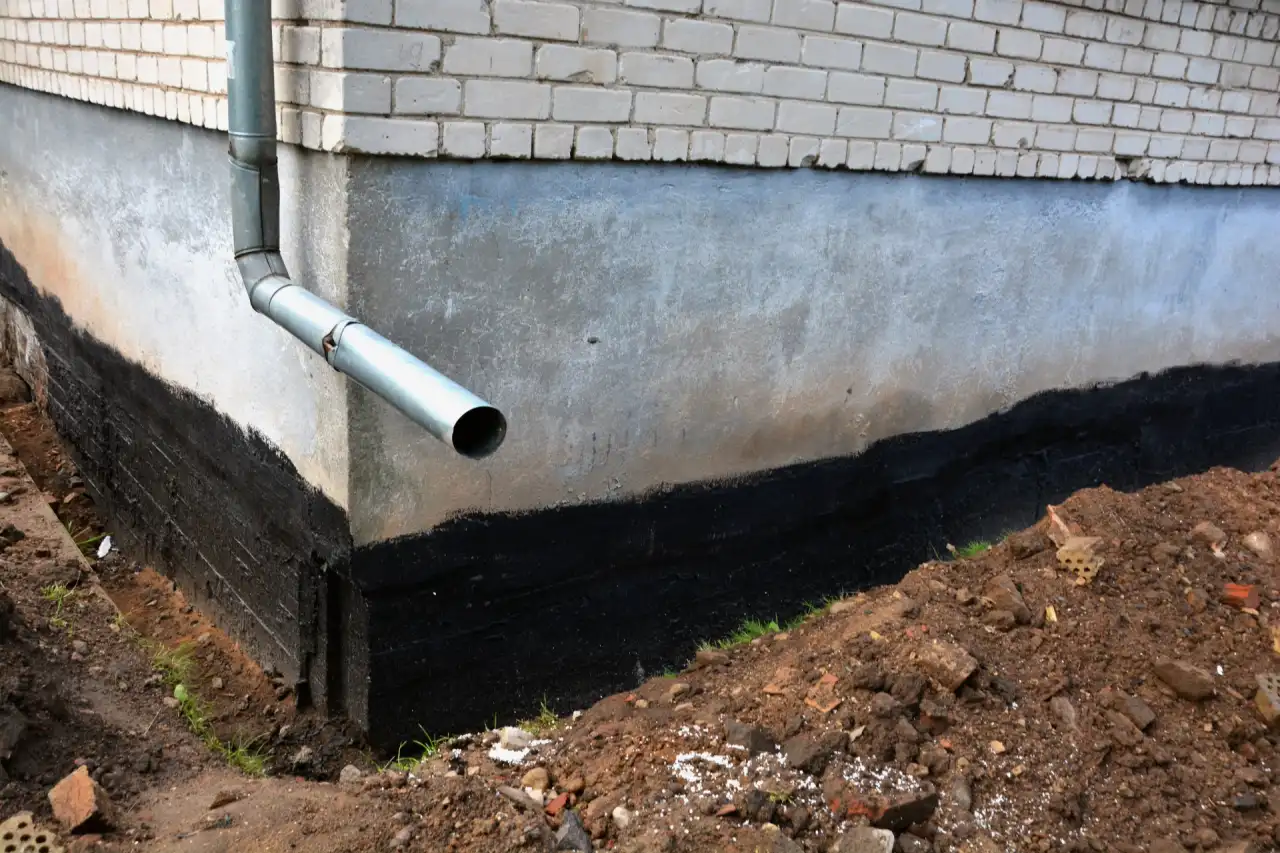
The outlet is the part worth inspecting yourself when the job is done. It should be at an elevation where water genuinely discharges, it should be protected from getting buried or crushed, and it should be somewhere you can find in two years. Pop up emitters sit flush in the lawn and open under flow, which keeps things tidy, and they need to be locatable for maintenance.
Where the discharge point is on a slope or into a swale, some erosion protection at the outlet is worth having, because concentrated flow onto bare soil digs a hole.
Ask for a diagram or photos of the trench before backfill. That record is genuinely valuable later, whether for maintenance, for a future project, or for a buyer.
What Your Yard Looks Like Afterward
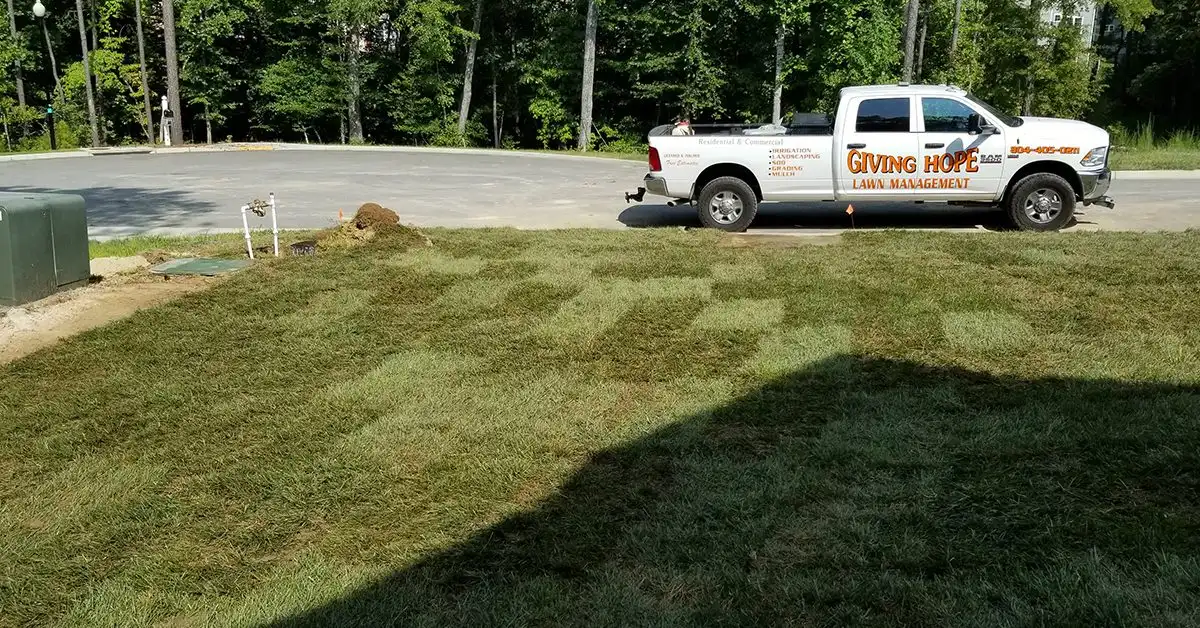
Being straight about this prevents disappointment. The trench line will be visible for weeks. The soil is disturbed, the turf along it was cut, and no amount of care makes that invisible on day one.
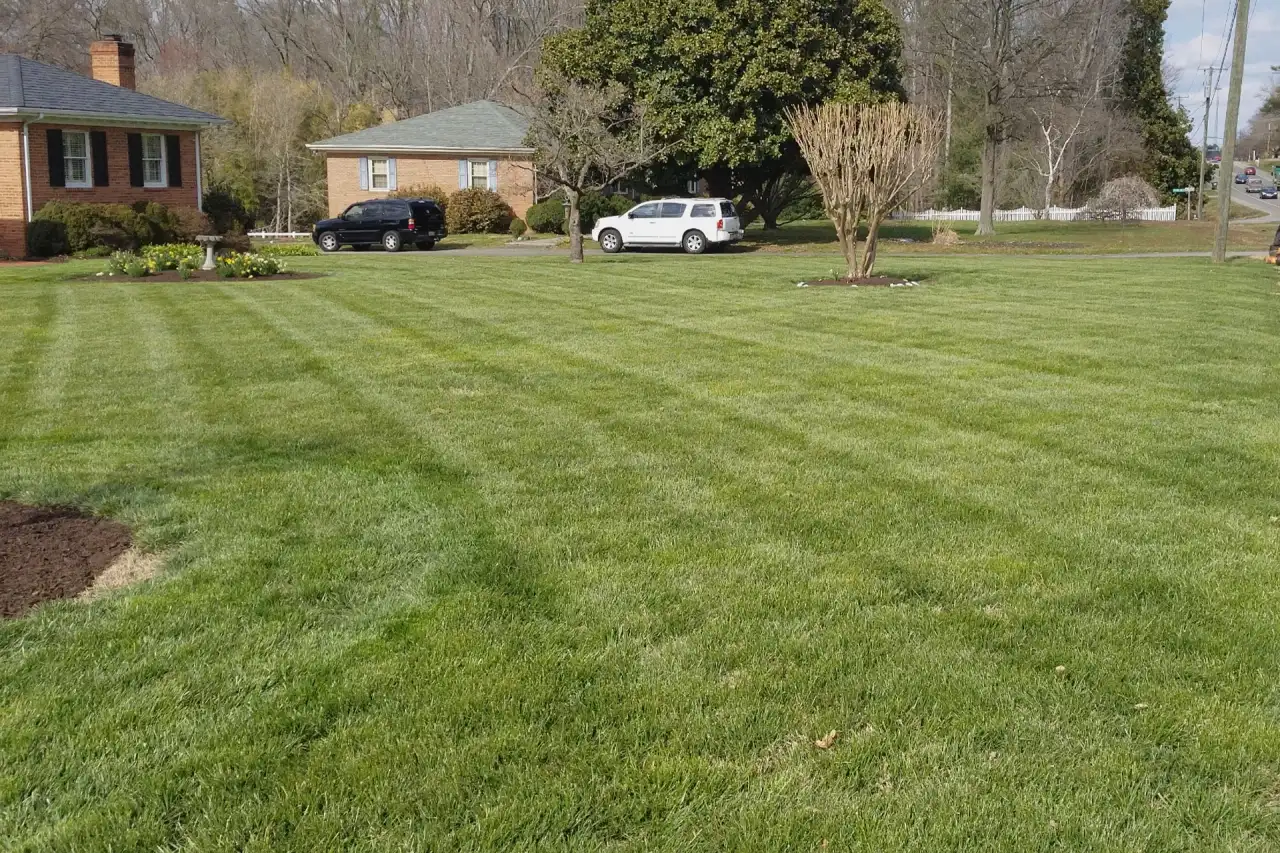
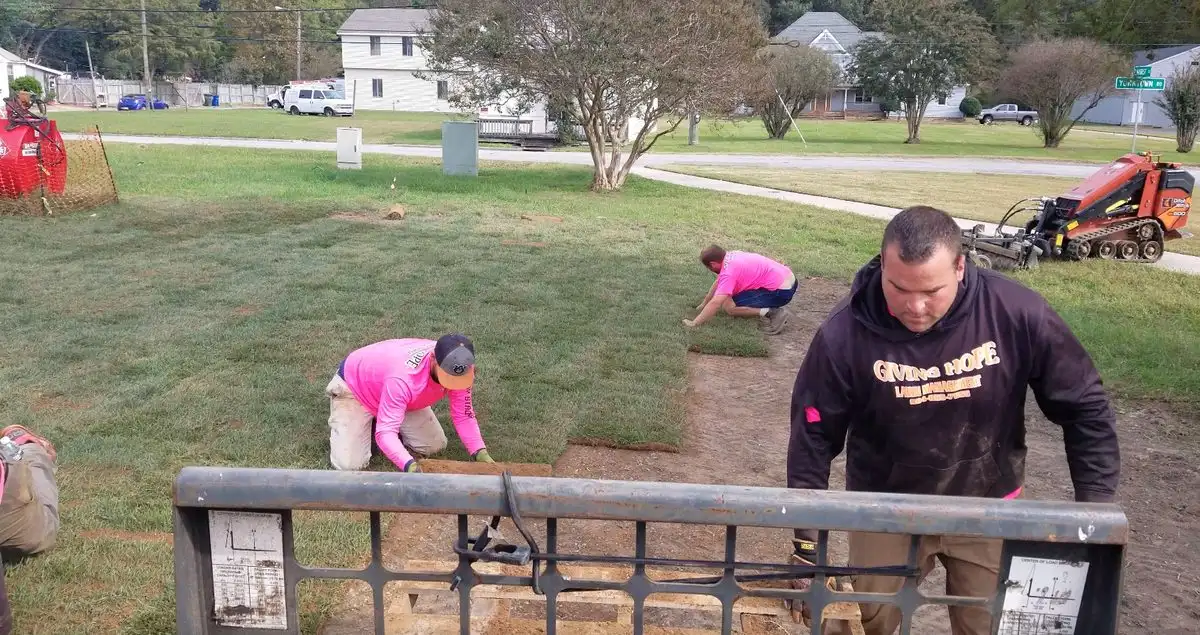
Restoration usually means grading the surface smooth, replacing removed sod where it was salvageable, and seeding where it was not. On the fescue lawns common across this area, fall seeding establishes well, which is a genuine advantage of doing this work in October rather than in July.
Expect some settling over the first few months regardless of compaction, particularly after heavy rain. A light topdressing the following spring to bring the line back flush is normal and worth planning for rather than treating as a defect.
The system itself you will not see. The way you evaluate it is by watching the area during the next real storm and seeing whether water leaves.
What to Do Next
Before the estimate, mark anything private you know about. Irrigation heads and lines, invisible fence, landscape lighting, a gas line to a grill, and the septic field if you have one. Miss Utility will not locate those.
When you get a quote, ask four things. Where does the water discharge. What pipe type and diameter, and at what fall. Is spoil removal included. What does surface restoration cover. Those four answers reveal how thoroughly a job has been thought through.
Plan to be home for the initial walk even if you do not need to be there during installation. The decisions that matter get made in that conversation.
If you would rather have someone design it, pull the locate, and install it properly, we are here for that. Call Giving Hope Lawn Management at 804-405-0211 or visit givinghopelawn.com. We serve Richmond, Glen Allen, Mechanicsville, Sandston and the surrounding area.