Lawn and Landscape
What Autumn Rain Tells You About Your Richmond Yard
Giving Hope Lawn Management • September 2026 • Richmond, VA • 7 min read
Short Answer: The best drainage diagnosis you will ever get is free, and it happens during the next steady rain. Water standing more than 24 hours after a storm means the soil is not draining, not simply that it rained hard. Around Richmond that is usually heavy clay, compaction from construction, or grade that falls toward the house rather than away from it. Fall is the right time to fix it, because the ground is workable, repairs settle over winter, and every drainage problem quietly becomes a lawn problem, a foundation problem, or a dead shrub the following year.
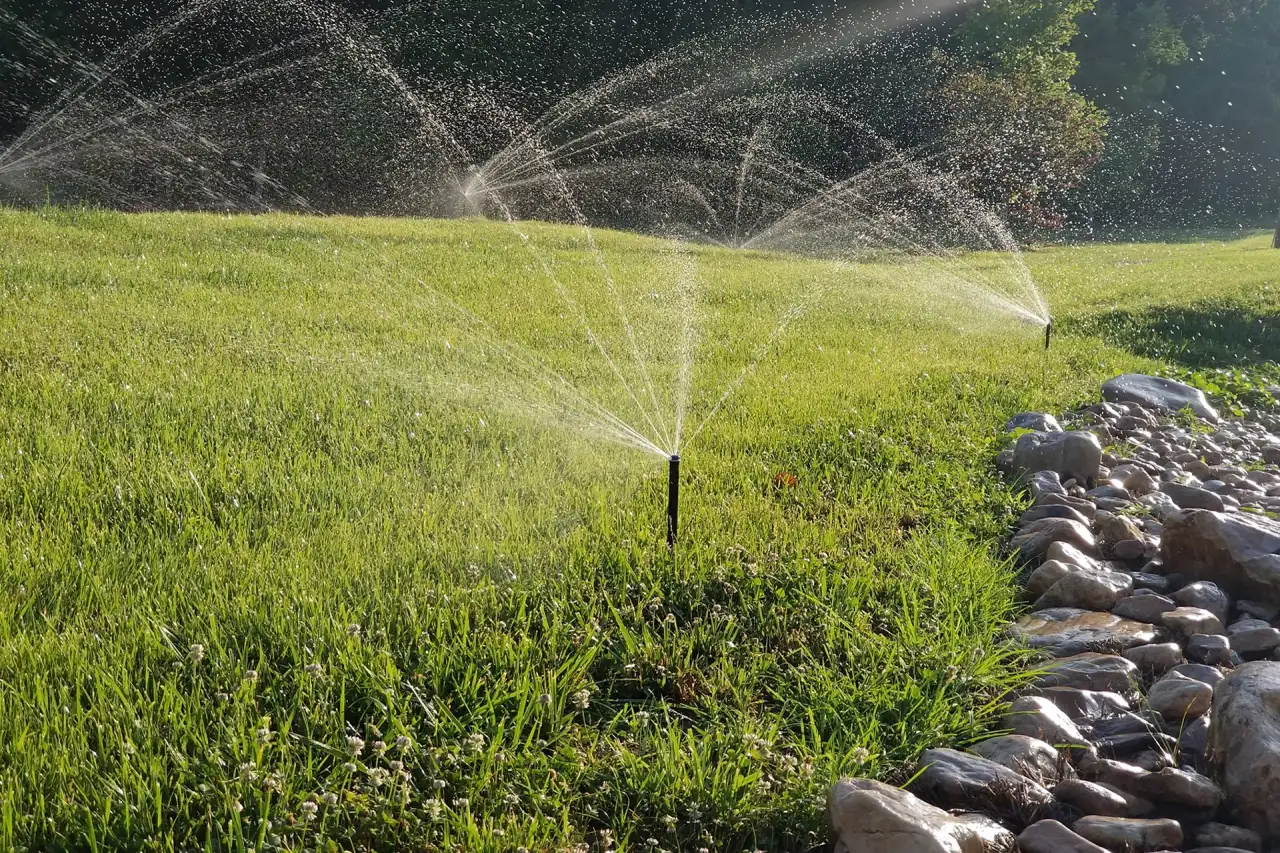
If there is a corner of your yard that is always soggy, a stripe of lawn that never grows well, or a spot by the downspout that has given up entirely, you already know where your water problem is. Most homeowners we talk to have known for years and have been treating it as a permanent feature of the property.
It usually is not. Here is how to read what the rain shows you, and what is genuinely fixable.
Go Outside During the Next Storm
This is the part nobody does, and it is worth more than any inspection we could perform on a dry day.
Put on a coat and walk the property while it is actually raining. Watch where water arrives from, the path it takes across the yard, where it pools, and where it leaves. Look at what your downspouts are doing, whether the gutters are overflowing at a particular corner, and whether water is running toward the foundation or away from it.
Then go back out 24 hours after the rain stops. Anything still holding water at that point is a real drainage problem rather than a temporary puddle. That 24 hour mark is the honest dividing line.
Take photographs. When we come out on a sunny Tuesday three weeks later, your photographs of the yard mid storm are far more useful than our guesswork about where the water went.
What Is Usually Going On Around Here
Central Virginia gives us a fairly consistent set of causes.
Clay is the foundation of most of it. Clay soil drains slowly by nature, and when it is compacted it barely drains at all. A great many neighborhoods around Richmond and Mechanicsville were built by stripping the topsoil, driving heavy equipment over the subsoil for months, and then spreading a thin layer of topsoil back over the top before laying sod. That thin layer drains fine until water reaches the compacted pan beneath it and stops.
Grade is the second cause. The ground should fall away from the house, generally something like six inches over the first ten feet. Over decades soil settles, mulch gets added year after year until beds sit higher than they should, and the fall reverses. Now the yard delivers water to the foundation.
Downspouts are the third and the most common quick win. A roof sheds an enormous volume of water, and a downspout that dumps it two feet from the foundation is concentrating all of it in the worst possible place. Corrugated extensions that have silted up, crushed, or disconnected underground are extremely common and almost never visible.
Why It Matters Beyond a Wet Patch
It is easy to treat a soggy corner as cosmetic. It rarely stays that way.
Turf drowns in saturated soil, because roots need air as well as water. That is why the wet stripe in your lawn is thin and weedy: you are not looking at a grass problem, you are looking at a water problem wearing a grass costume. Overseeding it every autumn without fixing the drainage is money spent annually on the same failure.
Shrubs and trees die of wet feet more often than people realize, and the decline is slow enough that it usually gets blamed on something else.
And water against a foundation is the expensive one. Persistent saturation next to the house means hydrostatic pressure against the foundation wall, damp crawl spaces, and the conditions that lead to mold and structural repair. A downspout extension is inexpensive. Foundation work is not.
The Fixes, Cheapest First
We would always rather start with the simple end, and surprisingly often that is enough.
Clean the gutters and extend the downspouts. Getting roof water six to ten feet away from the house, onto ground that slopes away, resolves a meaningful share of the drainage complaints we get called about. It is the first thing to try and the least expensive.
Correct the grade next to the house. Sometimes this is genuinely just pulling back years of accumulated mulch so the beds are not higher than the lawn. Sometimes it means bringing in soil and reshaping the first several feet so water is directed away.
Core aerate and improve the soil where compaction is the issue. On a lawn that is merely slow rather than genuinely waterlogged, annual aeration plus organic matter over a few seasons makes a real difference and costs a fraction of an engineered solution.
Then come the constructed answers. A French drain, which is a perforated pipe in a gravel trench, intercepts subsurface water and carries it somewhere useful. A dry creek bed handles surface flow while looking like a deliberate landscape feature. A catch basin collects water from a low point and pipes it away. All of these need somewhere legitimate to discharge to, which is exactly the part that gets skipped by whoever installed the pipe that now ends under your neighbor's fence.
Where the Water Is Allowed to Go
This is the part of drainage work that gets skipped most often, and it is the part that turns a fix into a dispute.
Every drainage solution moves water from where it is to somewhere else. That somewhere else has to be legitimate. Piping your problem to the property line and letting it discharge onto your neighbor's yard is how a wet corner becomes an argument, and in some cases a legal one. Concentrating flow that previously spread out diffusely is treated differently from simply letting water run downhill as it always has.
Legitimate outlets are things like a street or curb where local rules allow it, an existing storm structure, a stable low point well inside your own property, a dry well sized for the volume, or a rain garden built to hold and infiltrate what arrives. Which of these is available depends on your lot, your grade, and in some neighborhoods your HOA.
It is worth asking any contractor exactly where the pipe ends before work begins. If the answer is vague, or if it is "just past the fence," that is worth pausing over. We would rather design a smaller solution that discharges somewhere defensible than a larger one that makes the problem someone else's.
Why Fall Is the Right Time
The ground is workable now in a way it will not be in February, and drainage work involves digging.
More usefully, a repair done in autumn gets tested by winter. Central Virginia gets steady cool season rainfall, so you find out whether the fix works while there is still time to adjust it, rather than discovering the problem again during a summer thunderstorm.
It also sequences properly with everything else. Regrading and then seeding, or fixing drainage and then planting, is the correct order. Doing it the other way round means tearing out work you just paid for.
What to Do Next
Wait for the next real rain and go look. Note where water arrives, where it sits, and what the downspouts are doing. Come back the following day and mark anything still wet. That is your problem list, and it costs nothing to produce.
Start with gutters and downspout extensions yourself. They are inexpensive, and if they solve it you have saved a great deal.
If water is reaching your foundation, if an area stays wet for days, or if you have been reseeding the same stripe every year, that is worth a professional look. Giving Hope Lawn Management handles drainage design and installation, grading, and foundation water problems across Richmond, Mechanicsville, Glen Allen, Ashland, Hanover, Rockville, and the surrounding area. Call 804-405-0211 or visit givinghopelawn.com.
Here is what to expect. We will want to see your storm photographs, we will check the grade around the house, and we will trace where your downspouts actually discharge, which is often not where anyone assumed. Then we will start with the least invasive fix that will genuinely work rather than selling you a trench you may not need.