Lawn and Landscape
Fall Is the Best Planting Season in Central Virginia
Giving Hope Lawn Management • September 2026 • Richmond, VA • 7 min read
Short Answer: Around Richmond, trees, shrubs, perennials, and sod all establish better when planted in fall than in spring. The reason is that soil stays warm well into November while air temperatures drop, so a new plant puts its energy into roots instead of into leaves it has to support through a Virginia summer. A shrub planted in October has roughly seven months of root development before it faces real heat. The same shrub planted in May has about six weeks. Fall planting also means less watering from you, because autumn rainfall does much of the work.
Most homeowners we talk to think of planting as a spring activity. The garden centers are full in April, the weather is pleasant, and everybody is thinking about their yard. It is completely understandable, and in this climate it is backwards.
Across the properties we work on around Richmond, Mechanicsville, and Glen Allen, the plants that struggle are disproportionately the ones that went in during spring. Not because anyone did anything wrong, but because of what a Virginia summer asks of a plant that has not had time to build a root system.
What Is Actually Happening Underground
A plant has to divide its energy between what is above ground and what is below. When you set a new shrub in the ground, its root ball is small and its leaves are already full size, which means it can lose water faster than it can take it up.
In spring, warming air pushes the plant to produce leaves and new top growth right away. That is the worst possible allocation for a new planting, because it increases water demand at exactly the moment the root system cannot meet it. Then July arrives.
In fall the signals reverse. Cooling air slows top growth almost to a stop, but our soil here holds warmth well into November, and roots keep growing whenever soil temperatures stay above roughly 45 degrees. So the plant spends autumn doing nothing visible above ground and a great deal below it. By the time spring comes it has a root system ready to support the growth it then produces.
Imagine moving into a house and spending the first winter fixing the foundation rather than furnishing the rooms. Nobody driving past sees the work. Everything afterwards depends on it.
What Goes In Now
Trees and shrubs are the clearest case. Balled and burlapped and container grown stock both establish well in fall here, and this is the ideal window for most of the workhorse plants in Central Virginia landscapes.
Perennials planted in September and early October get established before dormancy and come back noticeably stronger the following year than spring planted ones.
Spring flowering bulbs have to go in now, because they require a cold period to bloom. Daffodils, tulips, and crocus planted in October and November are what makes a yard look alive in March.
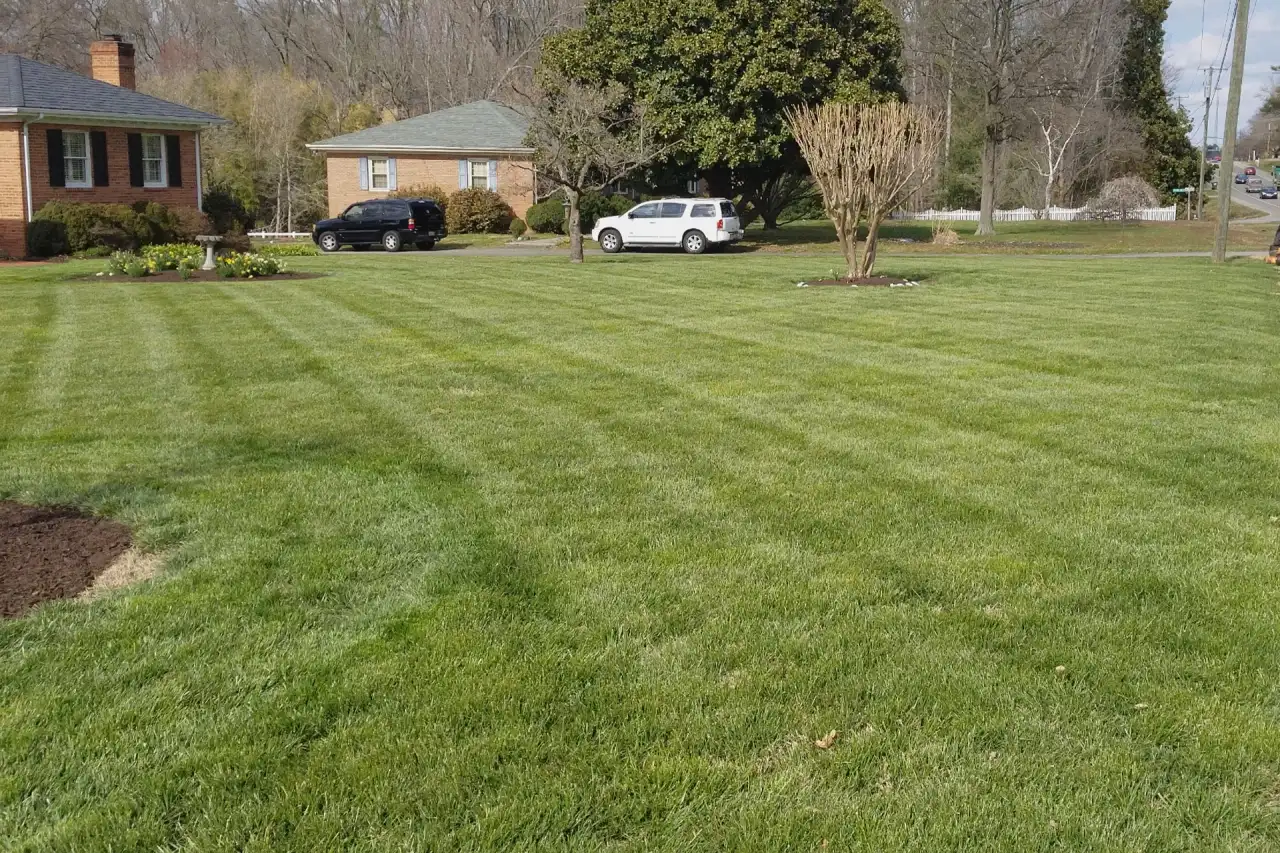
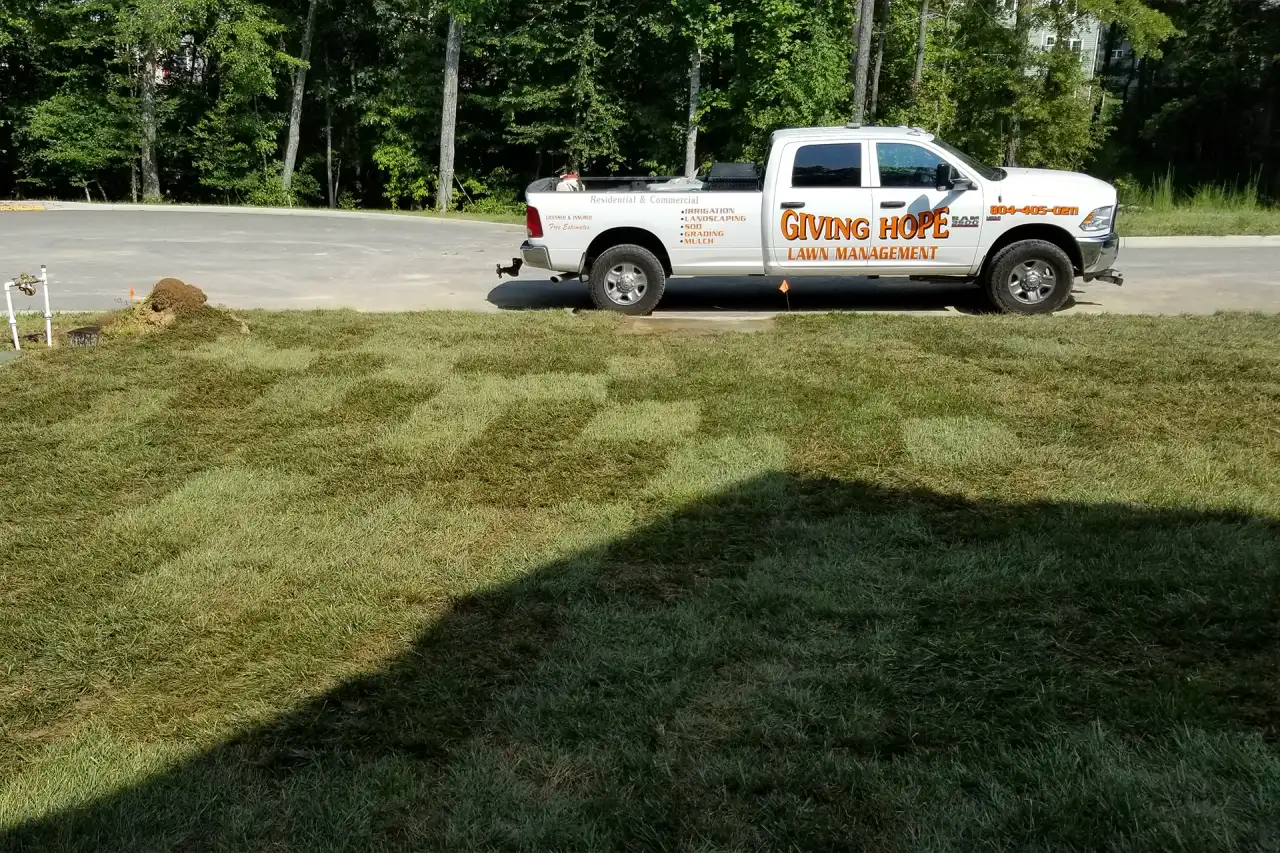
Sod is worth mentioning separately. Fescue sod installs beautifully in fall for the same reasons seed does, and it knits into the soil over the cool months. If you have an area that will not hold seed, a slope or a heavily trafficked path, sod in fall is often the more sensible answer.
What to Hold Until Spring
We would rather tell you where fall planting is the wrong call than pretend it is universal.
Broadleaf evergreens can struggle with winter desiccation if planted too late, because they keep transpiring through the winter while frozen ground limits what the roots can draw. Planted early enough in fall they are fine. Planted in December they are a gamble.
Anything marginally hardy for our area is better going in during spring, so it has a full season established before it meets a Virginia winter. Warm season ornamental grasses generally prefer spring planting as well.
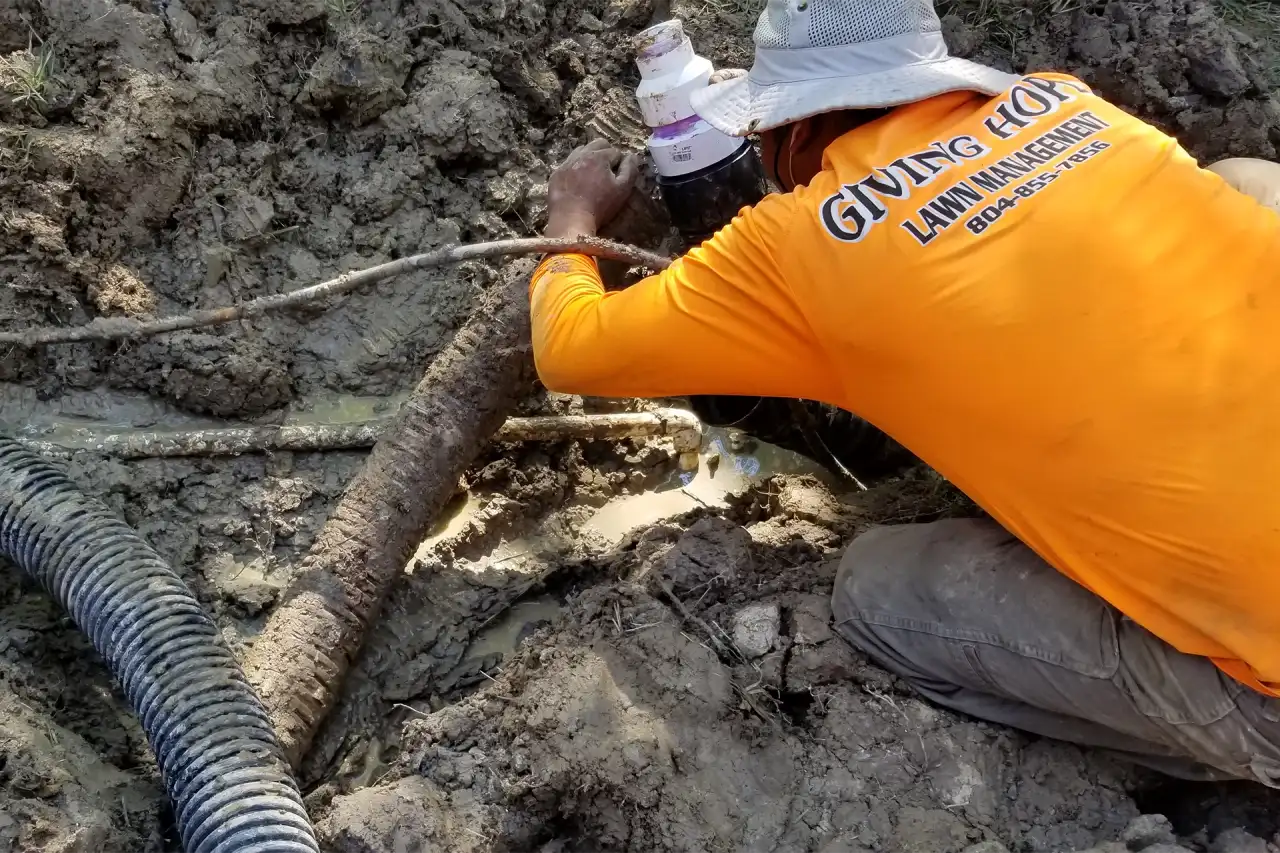
And if the site has a drainage problem, do not plant into it in either season. Fix the water first. We have replaced a lot of shrubs that died of wet feet rather than of anything a plant did wrong.
Getting the Planting Itself Right
Two mistakes account for most of the losses we see, and both are avoidable.
Planting too deep is the first. The root flare, the point where the trunk widens as it meets the roots, belongs at or just above the finished soil level. Buried too deep, a plant declines slowly over several years in a way that is hard to diagnose and impossible to reverse without replanting. If you cannot see a flare on a container plant, it is often buried in the pot and needs excavating before it goes in the ground.
Mulch piled against the trunk is the second. Mulch belongs spread in a broad, shallow ring with a gap around the stem, not heaped into a cone. Piled mulch holds moisture against bark, invites rot and rodents, and encourages roots to circle up into the mulch rather than out into the soil.
Our clay soil deserves one note as well. Digging a small, smooth sided hole in heavy clay creates something close to a pot in the ground, with slick walls roots struggle to penetrate. The hole should be wide, two to three times the root ball, with roughened sides, and no deeper than the root ball itself.
Do Not Over Amend the Hole
This one runs against a lot of received wisdom, so it is worth explaining rather than just asserting.
The instinct with heavy Central Virginia clay is to dig a hole, throw the clay away, and backfill with bagged garden soil or compost. It feels obviously right and it causes a specific, well documented problem. You have created a pocket of light, fluffy soil surrounded by dense clay. Water moves into that pocket easily and then cannot move out, so the root ball sits in a bathtub. Worse, roots that reach the boundary between rich soil and hard clay tend to turn and circle rather than push through, and the plant slowly girdles itself.
Current practice is to backfill mostly with the native soil you took out, broken up well, with at most a modest proportion of organic matter mixed evenly through it. The plant then meets consistent conditions in every direction and its roots grow outward into the surrounding ground, which is where they need to be.
Where organic matter genuinely helps is on the surface and across a whole bed rather than down a single hole. Two to three inches of mulch spread over the root zone, topped up annually, improves the soil steadily as it breaks down, and it improves all of it rather than one pocket.
Watering Through the Fall
New plantings still need water in autumn, and this is where people relax too early.
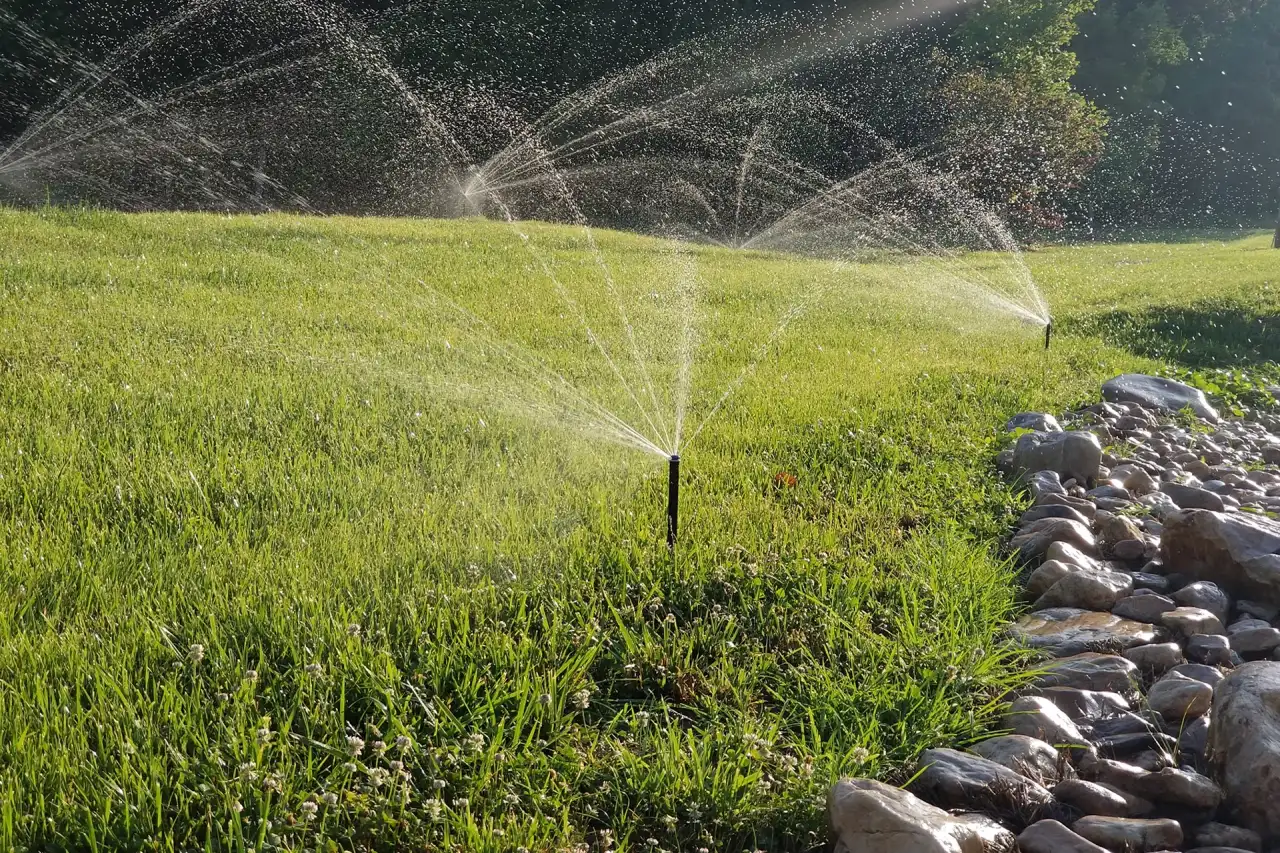
The rule of thumb is deep watering once or twice a week until the ground freezes, adjusted for rainfall. A brief shower does not count. What you want is water reaching the full depth of the root ball, which usually means slow application rather than a quick pass with a hose.
Keep going later than feels natural. November and even early December watering matters here, particularly for evergreens, and a dry autumn followed by a cold snap is what kills otherwise healthy new plantings.
What to Do Next
Walk your property and look at it as it actually is right now, at the end of a hard summer. The gaps are obvious in September in a way they are not in April, when everything is green and forgiving. Note where a shrub died, where a bed looks bare, where a slope is eroding, and where nothing has ever grown well.
That last one is usually a drainage or soil question rather than a plant selection question, and it is worth answering before you buy anything.
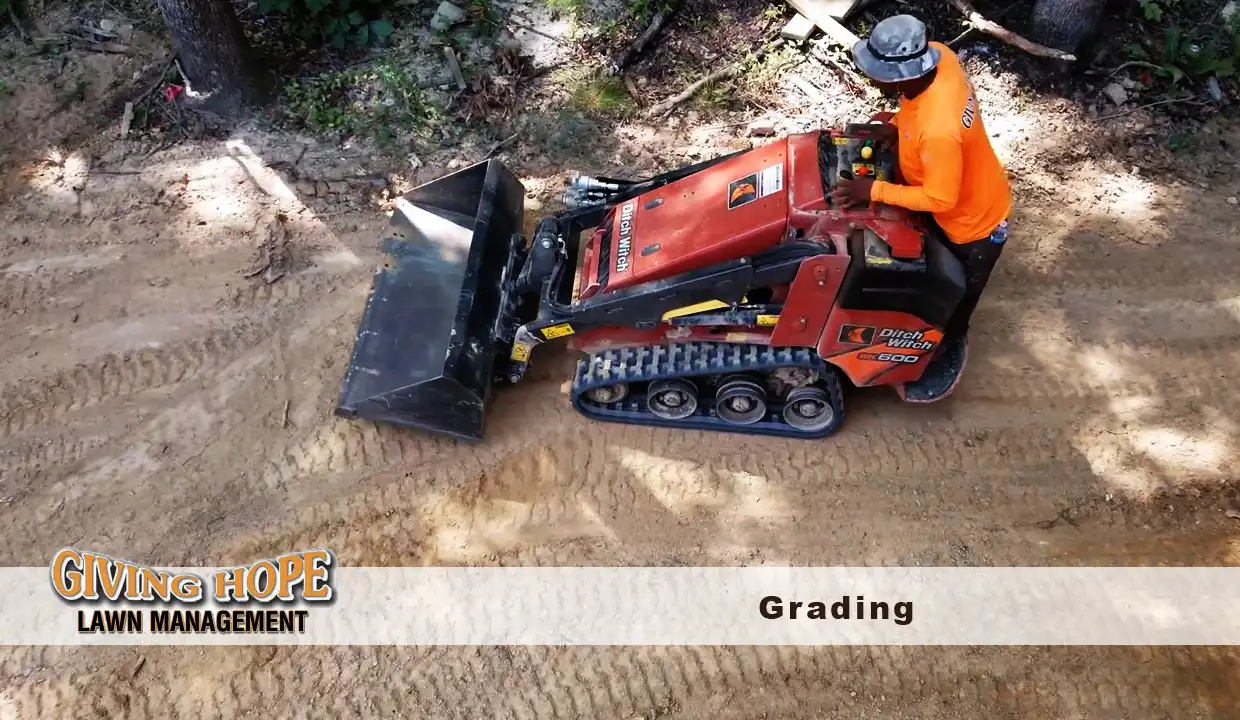
If you would rather have someone design it, choose plants suited to Central Virginia conditions, and install them properly, that is what we do. Giving Hope Lawn Management handles landscape design and installation, mulch, sod, drainage, and grading across Richmond, Mechanicsville, Glen Allen, Ashland, Hanover, and the surrounding communities. Call 804-405-0211 or visit givinghopelawn.com.
Here is what to expect. We will walk the property with you, tell you which areas are a planting problem and which are a water problem, and give you a plan that can be done in phases if that suits your budget better. We would rather install half a plan properly this fall than all of it badly.