Sprinkler Systems
Blowout, Manual Drain, or Automatic Drain? How Sprinkler Winterization Works in the Richmond Area
Giving Hope Lawn Management • November 2026 • Richmond, VA • 7 min read
Short Answer: There are three common ways to winterize a sprinkler system: blowing out the lines with compressed air, draining through manual drain valves, or relying on automatic drain valves. Most residential systems in the Richmond area are winterized with a compressed air blowout, which pushes water out of each zone through the sprinkler heads. Whatever the method, the water supply is shut off first, the backflow device is drained and protected, and the controller is turned off. Using the right air pressure and volume matters, since too much pressure can damage pipes and heads.
If you are reading this, you may know your sprinkler system needs to be winterized but are not sure what that actually involves. Maybe you have seen a technician pull up with an air compressor and wondered what they were doing. Or maybe you have thought about doing it yourself and want to understand the process first.
Here is how sprinkler winterization works, the main methods, and what a thorough job should include for systems in Richmond, Glen Allen, Mechanicsville, and the surrounding area.
The Goal: Get the Water Out
The purpose of winterization is simple: remove enough water from the irrigation system that freezing temperatures cannot crack pipes, fittings, valves, heads, or the backflow preventer. How that water is removed depends on how the system was designed.
Step One: Shut Off the Water Supply
Every winterization starts by shutting off the water supply to the irrigation system. The shutoff valve is usually located inside the house, often in a basement or crawl space, or in a valve box near the water meter. Shutting it off isolates the irrigation system from the home's water supply.
Method One: Compressed Air Blowout
The blowout method is the most common approach for residential systems in the Richmond area. A compressor is connected to the system, usually at a fitting near the backflow preventer. Then each zone is opened one at a time, and air pushes the water out through the sprinkler heads until they spray only mist and air.
The key is using the right amount of air. Too little, and water stays in the lines. Too much pressure can damage pipes, fittings, and heads. Professionals use compressors that deliver enough air volume to clear the lines while keeping pressure within a safe range for residential systems.
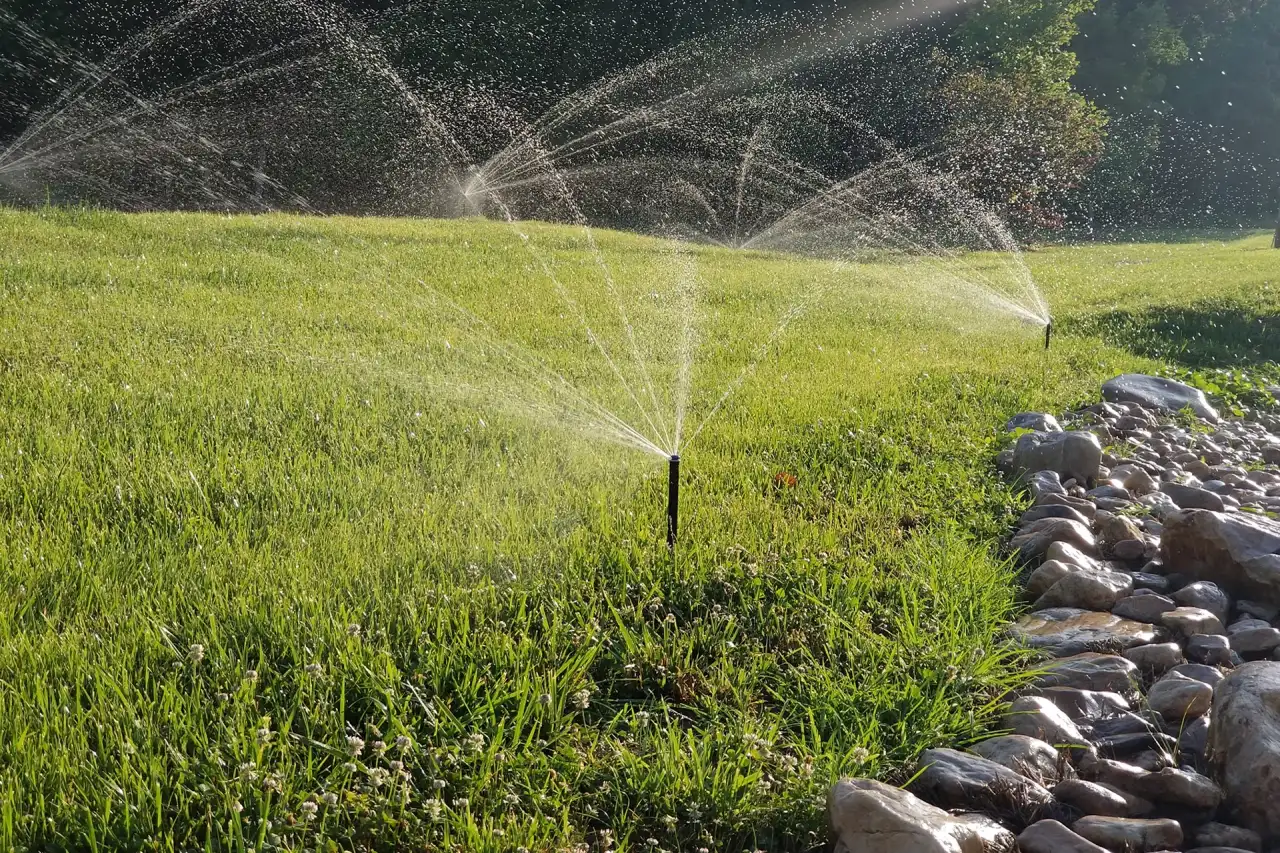
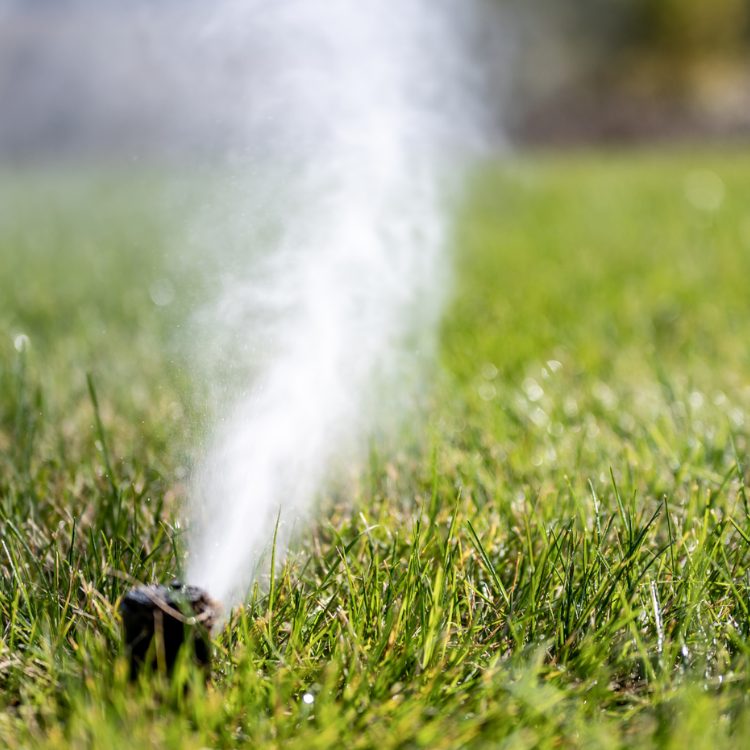
A sprinkler head spraying a fine mist of air and water, rather than a solid stream, is what a good blowout looks like near the end of each zone. That mist tells the technician the zone is nearly clear.
Method Two: Manual Drain Valves
Some systems are designed with manual drain valves at the low points of the pipe. To winterize, the water supply is shut off, and each drain valve is opened to let water flow out by gravity. This works well when the system was built with drains in the right places, but water can remain in sections that do not slope toward a drain.
Method Three: Automatic Drain Valves
Some systems have automatic drain valves that open when pressure drops, allowing water to drain out of the lines after each use. After shutting off the water supply, the system drains itself. Like manual drains, automatic drains depend on proper design and slope, and they can leave water in some sections. Many professionals still blow out systems with automatic drains for extra protection.
Draining the Backflow Preventer
Regardless of the method, the backflow preventer needs special attention. It is usually above ground and contains internal valves and brass parts that are easily damaged by freezing. During winterization, its test cocks and valves are opened and positioned to drain water and prevent trapped pockets. Many homeowners then cover it with an insulated bag for added protection.
Turning Off the Controller
After the lines are cleared, the irrigation controller is set to off or rain mode so it does not try to activate zones over winter. Most controllers keep their programming, so the schedule is ready for spring.
Drip Irrigation Zones
Many Richmond-area landscapes include drip irrigation in beds. Drip zones use lower pressure and smaller tubing, so they need gentler handling during a blowout. Some drip systems have their own drain points or filters that should be opened.
Pumps and Wells
Some homes use a well or pump to supply the irrigation system. Pumps need to be drained and protected according to the manufacturer's instructions, since water trapped in a pump can crack the housing.
How Long It Takes
A typical residential blowout takes well under an hour or two, depending on the number of zones and the size of the system. Larger properties and systems with many drip zones take longer.
Can You Do It Yourself?
Some homeowners winterize their own systems, especially those with manual or automatic drains. Blowing out a system yourself requires a compressor with enough air volume, the right fittings, and care to avoid overpressurizing the lines. Never stand over sprinkler heads during a blowout, and wear eye protection, since debris can be ejected at high speed.
For many homeowners, the time, equipment, and risk of damaging the system make professional winterization worth it.
What a Professional Winterization Should Include
A thorough winterization generally includes shutting off and confirming the water supply, draining and protecting the backflow device, clearing each zone, including drip zones, using appropriate pressure, turning off or setting the controller, and noting any problems spotted during the process, like broken heads or leaking valves, so they can be addressed in spring.
When to Schedule
In the Richmond area, winterization usually happens from late October through November, once the lawn no longer needs regular watering and before the first hard freeze. Scheduling early helps avoid a last-minute rush when a cold snap is forecast.
Spring Start-Up
In spring, usually in April, the process runs in reverse. The water supply is turned back on slowly to avoid pressure surges, the backflow device is closed and checked, each zone is tested for leaks, broken heads, and coverage, and the controller is reprogrammed for the season.
Leaking Valves and Broken Heads
A blowout is also a good chance to spot problems. Heads that do not pop up, spray sideways, or leak at the base, and valves that do not close fully, show up clearly while each zone is being cleared. Noting those issues in fall makes spring repairs faster.
Rain Sensors and Smart Controllers
If your system has a rain sensor or smart controller, winterization is a good time to check that it is working and to update settings so the system is ready to adjust automatically next season.
Common Winterization Mistakes
A few mistakes come up often. Waiting until after a hard freeze. Forgetting to drain the backflow device. Using too much air pressure. Skipping drip zones. And leaving the controller on, so it tries to run all winter.
What a Thorough Winterization Looks Like
Imagine this. A technician arrives in early November, shuts off the water, drains the backflow, clears each zone until the heads spray only mist, covers the backflow device, and turns off the controller. In April, the system starts up without a leak, and every zone runs like it did last summer.
What to Do Next
Find your irrigation shutoff valve and backflow device, and find out whether your system has manual or automatic drain valves. Schedule winterization for late October or November, before the first hard freeze. If you blow out the system yourself, use the right equipment, keep pressure within a safe range, wear eye protection, and never stand over the heads.
If you would rather have someone else handle it before the first hard freeze, we are here for that. Giving Hope Lawn Management offers sprinkler system winterization in Richmond, Glen Allen, Mechanicsville, and the surrounding area. Call 804-405-0211 or visit givinghopelawn.com to request a free quote.
Here is what to expect. We will locate your system's shutoff and backflow device, talk through how your system is set up, and explain how we will winterize it before we start. You will know what was done and what to do when it is time to turn the system back on in spring.