Lawn and Landscape
Why September Decides What Your Richmond Fescue Lawn Looks Like All Year
Giving Hope Lawn Management • September 2026 • Richmond, VA • 7 min read
Short Answer: Most lawns around Richmond are tall fescue, which is a cool season grass. Fescue does not spread to fill in bare ground the way Bermuda does, so the only way a fescue lawn gets thicker is by adding seed, and the only reliable window to do that in Central Virginia runs from about the first week of September through early October. Soil is still warm enough for fast germination, air temperatures are falling, and the new grass gets seven or eight months to root before it meets its first Virginia summer. Seed in spring instead and those seedlings face June with a root system a few weeks old.
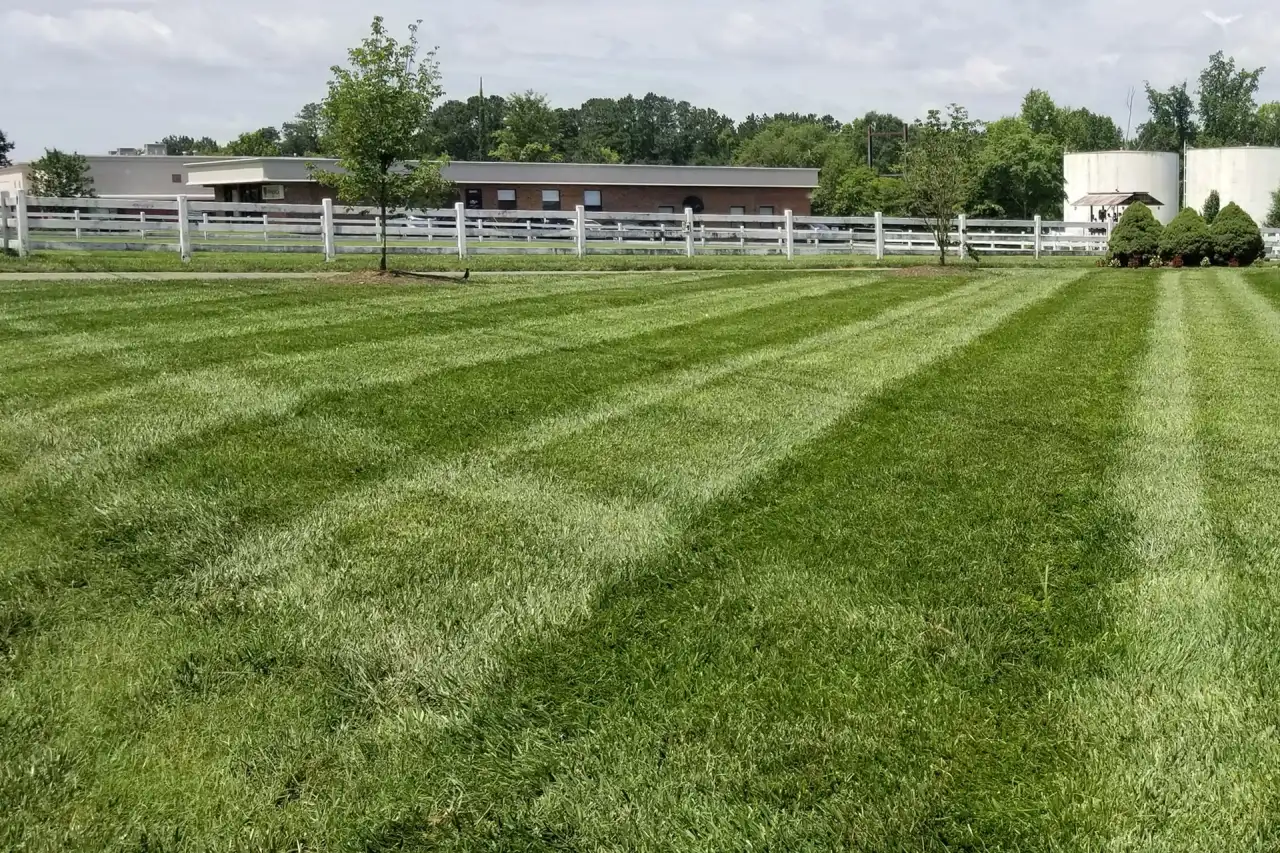
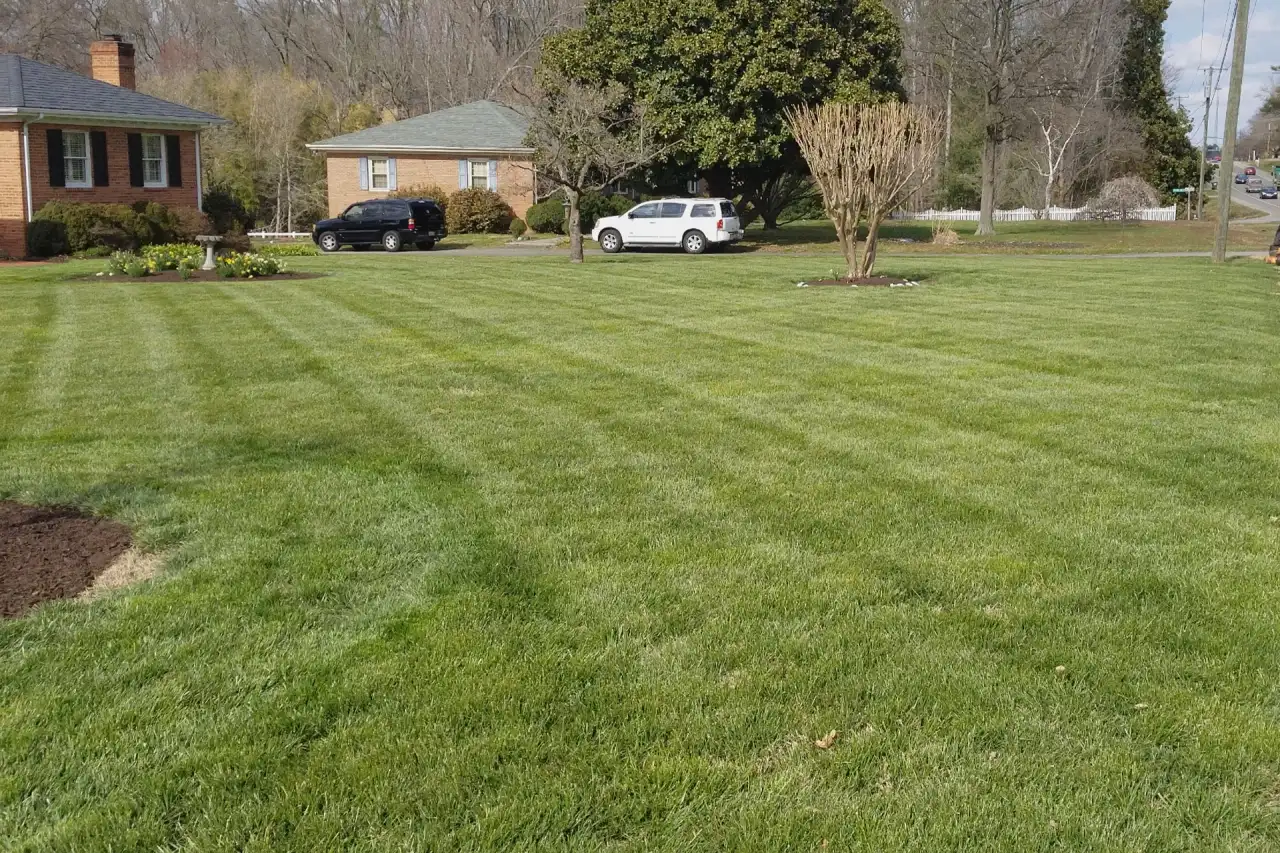
If you are standing in your yard looking at a lawn that thinned out badly over July and August, you are looking at the normal condition of fescue in Central Virginia after a hard summer. It is not a sign that you did something wrong. It is what this grass does here.
The important part is what happens next. We walk a lot of properties this month, and the difference between the lawns that look good next June and the ones that do not is mostly decided in the next six weeks. Not by product, not by spending more, but by whether the seeding happened and whether it happened correctly.
Fescue Does Not Repair Itself
This is the single fact that explains everything else, and most homeowners we talk to have never had it explained.
Warm season grasses like Bermuda and zoysia spread. They send out runners above and below ground, and given water and fertility they will creep sideways and close a bare patch on their own. Tall fescue is a bunch type grass. Each plant grows as a clump and gets a little wider, but it does not travel. A bare spot in a fescue lawn stays a bare spot until seed lands in it.
So when a Richmond summer kills off some percentage of your fescue plants, that density is gone permanently unless you replace it. Do nothing for three summers running and the lawn thins a little more each year, weeds fill the gaps because bare ground never stays bare, and eventually people conclude they need to start over.
Picture a wool sweater losing a few threads every year with nothing woven back in. That is a fescue lawn without annual overseeding.
Why This Particular Window
Two things have to be true at once for seed to succeed, and in Central Virginia they overlap for roughly five or six weeks in the fall.
The soil has to be warm. Fescue germinates well when soil temperatures sit in the 60s and low 70s. In September our soil is still holding summer warmth, so seed comes up in one to three weeks rather than sulking.
The air has to be cooling. Young seedlings have almost no root system and cannot handle heat stress or drought. September and October give them mild days, cool nights, and usually more reliable rainfall than August.
Spring appears to offer the same thing and does not. Soil in March and April is cold, so germination is slow, and by the time those seedlings are established it is May. Then Virginia summer arrives and a plant with six weeks of root has to survive what killed established plants the year before. It is also the season when crabgrass germinates, and you cannot apply crabgrass pre-emergent over new seed. Spring seeding in this region is mostly a way to spend money twice.
Aeration Is Half the Job
Seed that lands on top of thatch or compacted clay usually does not become grass. It needs contact with actual soil, and around here it often needs help getting there.
Much of the Richmond area sits on heavy clay, and a great many neighborhoods are built on ground that was scraped, driven over by equipment, and then given a thin layer of topsoil. That soil compacts. Water runs off it instead of soaking in, roots struggle to push through it, and seed sitting on the surface dries out and dies.
Core aeration pulls thousands of small plugs out of the lawn, and each hole is a protected pocket of open soil with moisture retention and no competition. Seed falls into those holes and germinates at a far higher rate than seed broadcast onto an unaerated lawn. Aerating and seeding on the same day, in that order, is the single biggest lever available on a Central Virginia fescue lawn.
Leave the cores where they fall. They look untidy for a week or two, then rain and mowing break them down and return that soil to the surface, which is exactly where you want it.
The Part People Get Wrong: Water
More overseeding fails for this reason than for any other, and it is entirely within your control.
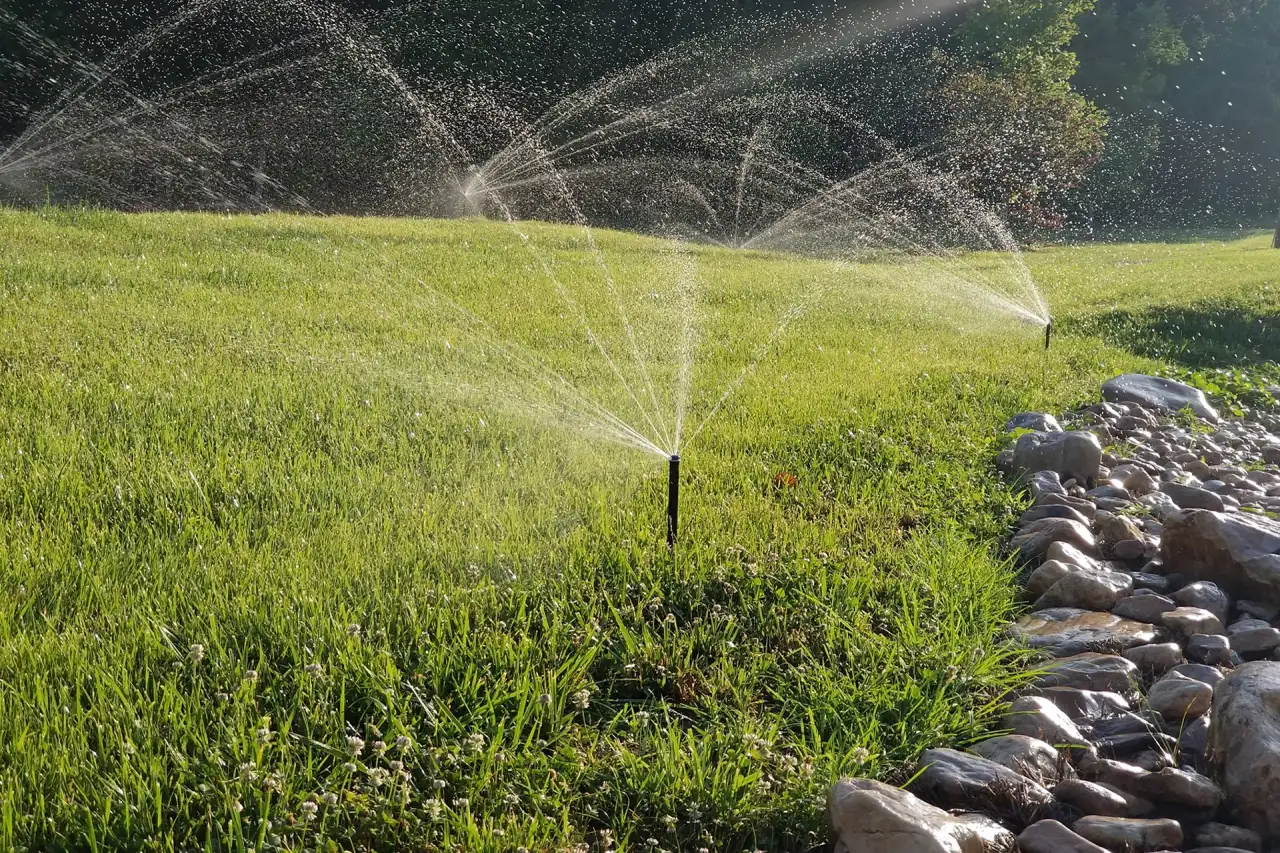
Established fescue wants deep, infrequent watering to drive roots down. New seed wants the opposite. Until it germinates, the top half inch of soil must stay damp, which in practice means light watering once or twice a day for the first two to three weeks. If that seed dries out for a single hot afternoon after it has started to sprout, it dies, and no amount of watering afterwards brings it back.
Once seedlings are up and growing, you gradually shift back toward less frequent and deeper watering to push those roots down before winter.
This is the honest reason we ask homeowners to commit before we seed. If nobody is going to be home to water for the next three weeks, we would genuinely rather reschedule than take your money and watch the seed fail.
What the First Six Weeks Actually Look Like
Knowing the sequence keeps people from panicking in week two, which is when most of the worried phone calls arrive.
For the first seven to ten days, nothing visible happens. The lawn looks exactly as it did, plus cores drying on the surface. This is normal and it is not a sign the seed failed.
Somewhere between days ten and twenty-one you start seeing a green haze, very fine and much lighter than the established grass around it. New fescue seedlings are thin and slightly translucent, and they will look nothing like a lawn yet.
By week four or five they thicken and darken, and you can mow for the first time. Wait until the new grass reaches roughly three and a half inches, use a sharp blade, and take off no more than a third. A dull blade tears young seedlings out of the ground rather than cutting them.
Germination is uneven, and that is normal too. Seed that fell into an aeration hole comes up before seed that landed on thatch. Judge the result at week six, not week two.
What Else Belongs in the Same Visit
Fall fertilization matters here, and it is doing a different job than a spring feeding. Cool season grass puts its energy into roots and stored carbohydrates in autumn, so feeding now builds the root system that carries the lawn through next summer rather than pushing soft top growth.
Soil testing is worth doing at least once. Central Virginia clay tends to run acidic, and fescue does not perform well in acidic soil no matter how much fertilizer goes down. Lime corrects it, but only if you know your numbers, and it works slowly enough that fall is the right time to start.
One caution. Do not apply a standard pre-emergent to an area you are about to seed. Pre-emergent does not distinguish between weed seed and the fescue you just paid for. If you have both needs on the same property, tell us and we will plan around it.
What to Do Next
Look at your lawn honestly this week. If you can see soil through the grass when you look straight down, it is thin enough to need seed. If you can push a screwdriver into the ground easily, compaction is manageable; if it stops dead, you need aeration before seed will do anything.
Then decide whether you can water it daily for three weeks. That answer determines when to start, more than anything else does.
If you would rather have someone handle the aeration, the seed selection, the timing, and the fall feeding, that is what we are here for. Giving Hope Lawn Management serves Richmond, Mechanicsville, Glen Allen, Ashland, Hanover, Rockville, Sandston, and the surrounding communities. Call us at 804-405-0211 or visit givinghopelawn.com.
Here is what to expect. We will tell you whether your lawn needs overseeding or a full renovation, because those are different jobs at different prices and we would rather you hear the distinction up front. We will give you a watering plan in writing. And we will be straight with you if the window has closed for this year, because seed put down in November is seed wasted.